
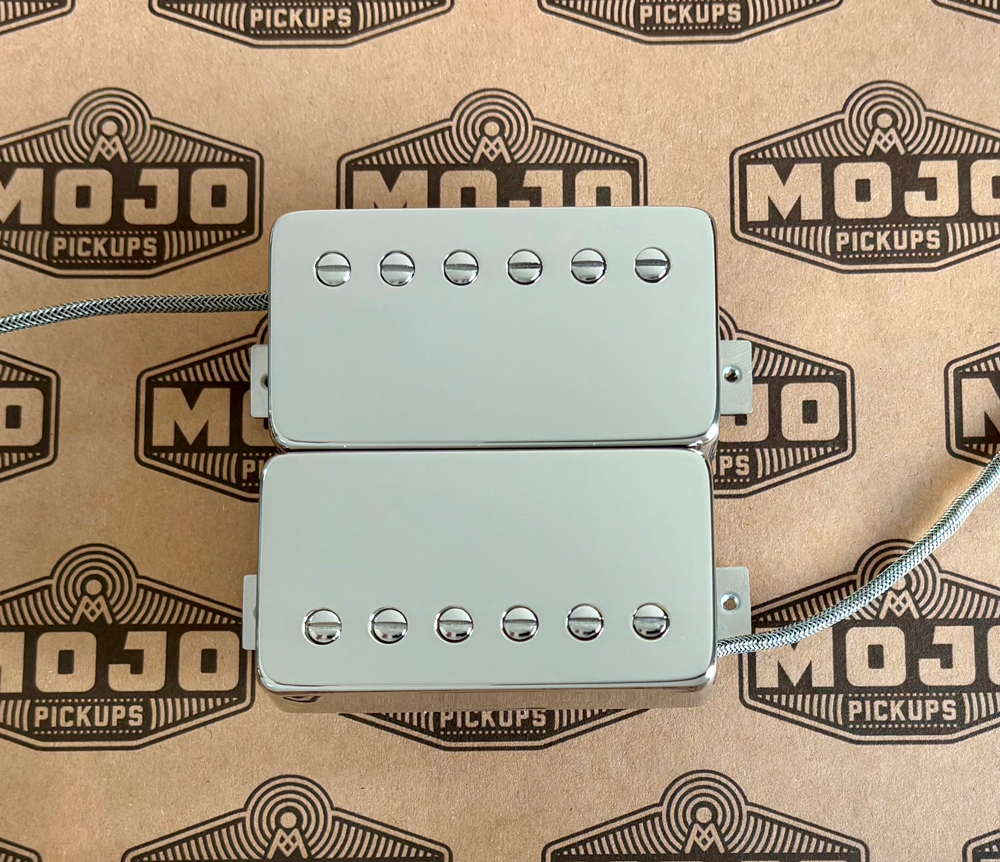
Intro
The Gibson PAF humbucker is one of the most influential guitar pickups ever made. Developed in 1957 to eliminate electrical hum, it produced the warm, powerful tone that shaped blues, rock and jazz. This guide explains how vintage PAF pickups were made and why they remain the gold standard for humbuckers.
Quick Facts/Details
| Feature | Details |
|---|---|
| Introduced | 1957 |
| Designer | Seth Lover |
| Company | Gibson |
| Magnet Types | Alnico II, III, IV, V |
| Typical Resistance | 7.2kΩ – 8.9kΩ |
| Famous Guitars | Les Paul Standard, ES-335 |
Quick guide to the legendary PAF pickup.
Vintage Gibson PAF pickups were produced at the company’s Kalamazoo, Michigan factory.
Production methods were relatively simple and sometimes inconsistent. Ironically, these small variations are part of what makes vintage PAF pickups so unique.
1. Bobbins
Each humbucker used two plastic bobbins that held the copper wire coils.
Typical features included:
-
Made from butyrate plastic, usually black however, sometimes cream.
-
One bobbin with six adjustable screw poles
-
One bobbin with six fixed steel slug poles, the slug coils have the stronger magnetic pull of the two coils.
These two coils formed the core of the humbucking design.
Why Some Vintage PAF Pickups Have Cream Bobbins
Some original Gibson PAF pickups feature cream-coloured bobbins instead of black.
This happened because of manufacturing variations; rumour has it they ran out of black dye, without a time machine, I can’t say for sure.
Butyrate plastic naturally appears cream or off-white before dye is added.
Since pickups were usually hidden beneath metal covers, colour consistency was not essential.
This resulted in several combinations:
-
Black / black – most common
-
Cream / black – later called zebra
-
Cream / cream – known as double cream
These combinations were purely accidental; the workers just used the parts available.
Zebra and Double-Cream Pickups
During the late 1960s and 1970s, many guitarists began removing pickup covers to achieve a slightly brighter sound.
When the covers came off, the mismatched bobbins underneath became visible.
The zebra humbucker (one black coil and one cream coil) quickly became an iconic look, appearing on guitars played by musicians such as:
-
Jimmy Page
-
Billy Gibbons
Later, pickup designer Larry DiMarzio released replacement pickups with two cream bobbins. The company DiMarzio eventually trademarked the double-cream pickup appearance in the United States.
2. Coil Winding
Each bobbin was wound with extremely thin 42-gauge enamel-coated copper wire.
The coils were wound on Leesona winding machines, but the process was typically stopped manually. This meant the exact number of turns varied from pickup to pickup.
Typical specifications included:
-
Around 4,000–5,000 turns per coil
-
Total pickup resistance around 7.2kΩ–8.9kΩ
Because the screw and slug coils were wound on different winders, most vintage PAF pickups have a slight coil imbalance, which contributes to their complex harmonic response.
How 1959 Winding Drift Created the Hottest Vintage PAFs
Why many of the most powerful late-50s humbuckers come from 1959
Among vintage pickup obsessives, one pattern comes up again and again:
Some of the hottest original PAFs come from 1959.
Collectors frequently find late-1959 pickups reading 8.5kΩ–9kΩ, noticeably higher than many earlier examples from 1957–1958.
This wasn’t a deliberate design change by Gibson.
It was the result of something far less glamorous:
winding drift.
What Is Winding Drift?
“Winding drift” refers to gradual changes in how many turns of wire end up on a pickup coil over time.
This can happen when:
• winding machines lose calibration
• operators change winding habits
• production demand increases
• quality control loosens
At Gibson in the late 1950s, pickup coils were wound using Leesona 102 winding machines that did not automatically count turns.
Instead, the operator estimated the winding by watching the machine and stopping it manually.
Over months of production, those estimates began to creep upward.
Early PAF Winds (1957–1958)
https://www.mojopickups.co.uk/product/paf-vintage-59-low/
When humbuckers were first introduced in 1957, winding targets were relatively conservative.
Typical readings from early PAFs:
| Year | Typical DC Resistance |
|---|---|
| 1957 | 7.2kΩ – 7.6kΩ |
| 1958 | 7.4kΩ – 8.0kΩ |
Each coil usually contained roughly:
4,800 – 5,000 turns of 42 AWG wire
These early pickups tend to sound:
• open
• airy
• very articulate
They often have a slightly softer output and exceptional clarity.
Production Pressure in 1959
By 1959 Gibson was producing more guitars than ever.
Models using PAFs included:
-
Les Paul Standard
-
ES-335
-
ES-345
-
ES-175
-
Flying V
-
Explorer
Demand increased rapidly, especially for the Les Paul Standard, which today is the famous “Burst”.
More guitars meant:
more pickups per day.
As production sped up, operators often allowed coils to run a little longer before stopping the machine.
That small change gradually pushed average wind counts higher.
The Result: Hotter Coils
By late 1959, some PAFs show coil counts closer to:
5,200 – 5,400 turns per coil
Total DC resistance frequently rises into the:
8.3kΩ – 9kΩ range
This doesn’t sound like a huge difference, but in pickup design it’s significant.
More windings increase:
• output
• midrange emphasis
• compression
• sustain
At the same time, they slightly reduce extreme high-end frequencies.
The result is a pickup that feels stronger and thicker.
Why Some 1959 PAFs Sound Perfect
https://www.mojopickups.co.uk/product/paf-vintage-59/
The magic happens when winding drift combines with coil mismatch.
Example:
Coil A – 5,350 turns
Coil B – 4,950 turns
Now you get:
• higher output from the hotter coil
• preserved high-end from the weaker coil
• enhanced harmonic complexity
That combination creates the famous “hot but clear” vintage PAF tone.
It’s a big reason why many legendary recordings from 1959 Bursts have such powerful yet articulate guitar sounds.
Magnet Pairing Amplified the Effect
Another variable was magnet choice.
A hotter coil paired with an Alnico V magnet produced a pickup that felt far more aggressive than early PAFs.
Typical tonal results:
Hot wind + Alnico V:
• punchy bass
• strong upper mids
• excellent sustain
• cutting lead tone
Hot wind + Alnico IV:
• balanced but powerful
• tight low end
• singing midrange
These combinations became the blueprint for many modern boutique pickups.
The Myth of the “9k PAF”
https://www.mojopickups.co.uk/product/paf-vintage-59-high-wind/
Collectors sometimes talk about mythical 9kΩ PAFs.
They do exist — but they’re not common.
Most genuine examples fall around:
8.2kΩ – 8.8kΩ
Anything significantly higher often raises suspicion unless thoroughly verified.
Still, those upper-range winds are usually associated with late-1959 production.
3. Alnico Magnets
A bar magnet sat between the two coils.
Original Gibson PAF pickups used Alnico magnets, but Gibson did not strictly control which version was installed. Magnets could include:
-
Alnico II
-
Alnico III
-
Alnico IV
-
Alnico V
The magnet polarised the screw and slug poles, giving each coil opposite magnetic polarity.
4. Pickup Assembly
The pickup components were assembled on a nickel-silver baseplate.
Main parts included:
-
Nickel-silver baseplate
-
Two wound bobbins
-
Alnico bar magnet between the coils
-
Steel keeper bar
-
Pole screws and slug poles
Most early units carried the famous “Patent Applied For” decal on the baseplate.
5. Humbucker Wiring
The coils were wired so they were:
-
Electrically out of phase
-
Magnetically opposite
This configuration allows the pickup to cancel electrical hum, a defining feature of a humbucker.
A single braided shield lead wire connected the pickup to the guitar’s electronics.
6. Pickup Tape
The coils were wrapped with black cloth pickup tape.
This simple step helped insulate the coils and hold them securely during assembly.
7. Nickel-Silver Covers
PAF pickups were fitted with nickel-silver covers.
These covers:
-
Were soldered to the baseplate
-
Slightly softened high frequencies
-
Protected the delicate coil windings
Some guitarists, however, removed the covers.
8. No Wax Potting
Unlike most modern pickups, 1950s Gibson PAF humbuckers were not wax potted.
Wax potting stabilises the coil windings by dipping the pickup in wax. Because early PAF pickups skipped this process, the coils could move slightly.
This gave them:
-
Greater harmonic sensitivity
-
Occasional microphonic behaviour
-
A more open, lively tone
The Golden Era of PAF Pickups (1957–1962)
The most desirable vintage PAF pickups were produced between 1957 and 1962.
During this period Gibson’s production methods allowed for small variations in:
-
Coil wind counts
-
Magnet types
-
Bobbin materials
-
Winding tension
Because of this, no two vintage PAF pickups sound exactly the same.
Many of these pickups appeared in the famous late-1950s Les Paul Standards, often called “Bursts”, which later became legendary among collectors.
Guitarists Who Defined the PAF Sound
The Gibson PAF humbucker helped shape the sound of electric guitar during the 1960s and 1970s.
Players including:
-
Eric Clapton
-
Jimmy Page
-
Duane Allman
-
Peter Green https://www.mojopickups.co.uk/product/paf-vintage-59-petergreen/
Used PAF-equipped guitars to create some of the most iconic blues and rock tones ever recorded.