

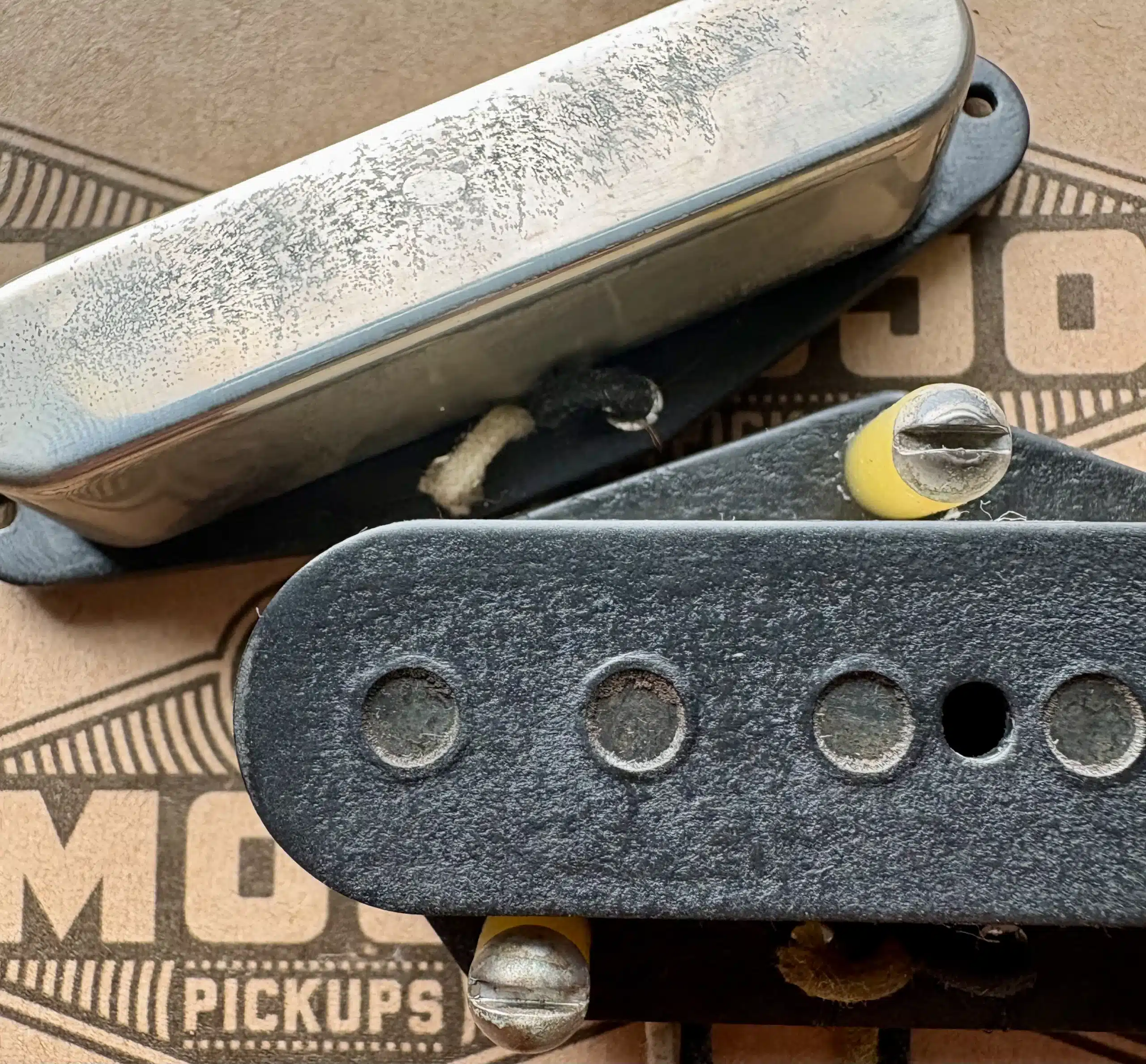
The Ultimate Guide to Pre-CBS Telecaster Pickups (1950–1964)
Pre-CBS Telecaster pickups are widely considered the benchmark for classic Tele tone. Built between 1950 and early 1965, before Fender was sold to CBS, these pickups helped define the sound of the electric guitar.
Their combination of simple engineering, vintage materials, and semi-handmade production created a tone that players are still chasing today.
From country twang to gritty blues and early rock ‘n’ roll, the Telecaster bridge pickup in particular became one of the most recognisable guitar sounds ever recorded.
In this guide we’ll explore:
-
What Pre-CBS Telecaster pickups actually means
-
How vintage Tele pickups were constructed
-
The materials used in original Fender pickups
-
Typical specifications and winding techniques
-
Tonal differences between early and late Pre-CBS eras
Whether you’re a vintage collector, guitar builder, or tone enthusiast, understanding these pickups provides insight into why the Telecaster remains one of the most iconic electric guitars ever made.
What Does “Pre-CBS” Mean?
The term Pre-CBS refers to Fender instruments and components manufactured before January 1965, when the company was purchased by the Columbia Broadcasting System (CBS).
Before this acquisition:
-
Fender was still a relatively small California manufacturer
-
Production processes relied heavily on skilled workers
-
Many steps involved manual labour rather than automation
-
Parts often varied slightly from unit to unit
Because of this, instruments from the period tend to have subtle variations in construction and tone.
Ironically, these small inconsistencies are one reason many players believe Pre-CBS guitars sound more dynamic and organic.
The Pre-CBS era includes the earliest versions of the Telecaster, originally introduced as the Fender Broadcaster in 1950.
The Origins of the Telecaster Pickup
Leo Fender designed the Telecaster to be practical, reliable and easy to manufacture. Unlike many guitars of the era, it used a bolt-on neck and modular electronics that could be serviced easily.
The pickup design reflected this philosophy. Rather than creating a complex system, Fender built a straightforward single-coil pickup that produced strong output and excellent clarity.
Telecaster Pickup Timeline
| Year | Model | Notes |
|---|---|---|
| 1950 | Broadcaster | First Tele-style pickups |
| 1951 | Nocaster | Same design, name temporarily removed |
| 1951–1964 | Telecaster | Gradual refinements |
Although minor adjustments occurred throughout the 1950s and early 1960s, the core pickup design remained remarkably consistent.
This consistency is one reason Telecasters remain so easy to repair and modify today.
Anatomy of a Pre-CBS Telecaster Pickup
While the Telecaster pickup design is simple, every component contributes to its unique tone.
Fibre Flatwork
Vintage Telecaster pickups used vulcanised fibreboard flatwork rather than plastic.
Typical characteristics include:
-
Black fibre flatwork on neck and bridge pickups, bottom fibre switches to grey in 1964
-
Eyelets pressed into the flatwork by hand
-
Slight irregular spacing between components
Because the flatwork was punched from large sheets and assembled manually, small variations between pickups were common.
The fibre material itself also contributes to the slightly organic resonance associated with vintage pickups.
Alnico Magnet Rods
Pre-CBS Telecaster pickups used Alnico rod magnets.
The two most common types were:
-
Alnico 3
-
Alnico 5
Alnico 3 magnets
Common in early 1950s Telecasters.
Typical tonal characteristics:
-
Softer bass response
-
Warm midrange
-
Smooth highs
Alnico 5 magnets
More common in later 1950s and early 1960s pickups.
These magnets typically produce:
-
Stronger attack
-
Tighter bass response
-
Brighter highs
The gradual transition from Alnico 3 to Alnico 5 during the 1950s helped shape the tonal evolution of Telecaster pickups.
Plain Enamel Magnet Wire
Original Telecaster pickups used plain enamel magnet wire, typically in 42 AWG or 43 AWG gauges.
Important characteristics include:
-
Thin enamel insulation
-
Vintage copper composition
-
Slight variations in the coating thickness
These subtle inconsistencies affect coil capacitance and resonance, contributing to the complex and lively tone of vintage pickups.
The Bridge Pickup Baseplate
One of the defining features of the Telecaster bridge pickup is the steel baseplate mounted beneath the coil.
Early Broadcaster, Esquire and Nocaster pickups used zinc-plated steel baseplates, which were slightly thicker than later versions.
Fender later switched to copper-plated steel baseplates, mainly because they were easier to solder during production.
The baseplate increases:
-
Inductance
-
Output level
-
Low-frequency response
Combined with the steel bridge plate of the Telecaster, this design contributes heavily to the instrument’s famous twang and bite.
Telecaster Neck Pickup Covers
The Telecaster neck pickup is covered by a metal cover.
Early models used chrome-plated brass covers.
Brass covers create stronger eddy currents, which reduce some high-frequency content and produce the classic Telecaster neck tone.
The resulting sound is:
-
Warm
-
Smooth
-
Rounded
-
Slightly darker than modern pickups
Many modern pickups use nickel-silver covers, which allow more treble frequencies to pass through.
How Pre-CBS Telecaster Pickups Were Wound
During the early Fender years, pickups were wound using mechanical winding machines operated by factory workers.
The typical process involved:
-
Magnets pressed into fibre flatwork
-
Components dipped in lacquer to prevent coil shorts
-
Pickup mounted onto a winding machine
-
Operator guiding the wire by hand
-
Coil wound until the approximate resistance was reached
-
Pickup dipped in lacquer or wax for stabilisation
Because the wire was guided manually, every pickup ended up slightly different.
These variations are often referred to as scatter winding, and many boutique pickup builders attempt to recreate this technique today.
Typical Pre-CBS Telecaster Pickup Specifications
Although exact specifications varied slightly between years, most pickups fall within certain ranges.
Bridge Pickup
Typical specifications:
-
DC resistance: 5.5k – 9k
-
Magnet type: Alnico 3 or Alnico 5
-
Wire: 42 or 43 AWG plain enamel
Neck Pickup
Typical specifications:
-
DC resistance: 6.8k – 7.8k
-
Magnet type: usually Alnico 5
-
Wire: 43 AWG plain enamel
It’s important to note that DC resistance alone does not determine tone. Magnet strength, coil tension, and winding patterns also play major roles.
Tonal Characteristics of Pre-CBS Telecaster Pickups
Bridge Pickup Tone
The Telecaster bridge pickup is known for its distinctive sound.
Key tonal traits include:
-
Bright attack
-
Strong upper-midrange presence
-
Tight bass response
-
Exceptional clarity
-
Signature country-style twang
Few pickups cut through a mix quite like a vintage Telecaster bridge pickup.
Neck Pickup Tone
The neck pickup offers a contrasting tonal character.
Common traits include:
-
Warm low end
-
Rounded highs
-
Smooth sustain
-
Slight natural compression
Although darker than modern designs, vintage Tele neck pickups still maintain impressive clarity.
Differences Between Early and Late Pre-CBS Pickups
1950–1952 (Broadcaster / Nocaster Era)
These pickups are highly sought after by collectors.
Typical characteristics include:
-
Alnico 3 magnets
-
43 AWG wire on both pickups
-
Raw, aggressive tone
-
Strong midrange punch
Many players consider these the most dynamic Telecaster pickups ever produced.
1952–1959 (Classic 1950s Telecaster Era)
These pickups represent the classic Telecaster sound.
Characteristics include:
-
Clear treble response
-
Strong twang
-
Improved production consistency
-
42 AWG wire used on bridge pickups
-
Increased use of Alnico 5 magnets
-
Staggered pole pieces appeared around 1955
Many guitarists believe mid-1950s Telecaster pickups represent the ideal Tele tone.
1960–1964 (Early 1960s Telecaster Era)
Early 1960s pickups typically show:
-
More consistent manufacturing
-
Slightly brighter tonal response
-
Stronger magnet charge
Compared with earlier examples, these pickups tend to sound cleaner and more focused.
https://www.mojopickups.co.uk/product-category/pickups/telecaster/
How to Identify Vintage Telecaster Pickups
Collectors often look for specific features when identifying original Pre-CBS pickups.
Common indicators include:
Fibre flatwork
Original pickups use vulcanised fibreboard rather than plastic.
Brass neck covers
Vintage neck pickups often feature chrome-plated brass covers.
Cloth push-back wire
Many Pre-CBS pickups used cloth-insulated wiring.
Copper-plated bridge baseplate
Most vintage Tele bridge pickups feature a copper-plated steel baseplate.
However, exact identification can be complex and often requires careful inspection.
Famous Guitarists Associated with Telecaster Tone
The Telecaster quickly became one of the most influential electric guitars ever produced.
Several legendary players helped define its sound.
Notable examples include:
-
James Burton
-
Roy Buchanan
-
Steve Cropper
-
Keith Richards
Their recordings helped cement the Telecaster’s reputation for clarity, punch and versatility.
Why Pre-CBS Telecaster Pickups Are Still So Influential
Despite decades of innovation in pickup design, the original Telecaster pickup remains one of the most widely used designs in electric guitar history.
Its enduring popularity comes down to several factors:
-
Simple and reliable design
-
Exceptional clarity and articulation
-
Dynamic response to playing technique
-
Compatibility with many musical styles
From country and blues to modern indie rock and alternative music, the Telecaster continues to prove why Leo Fender’s design was so revolutionary.
Final Thoughts
Pre-CBS Telecaster pickups remain one of the most influential pickup designs in the history of the electric guitar.
Their combination of vintage materials, simple construction and handmade variation created a tone that has inspired generations of musicians.
Whether you’re restoring a vintage instrument, building your own guitar, or simply chasing classic tone, understanding these pickups provides insight into why the Telecaster remains one of the most iconic guitars ever produced.
View my range here https://www.mojopickups.co.uk/product-category/pickups/telecaster/